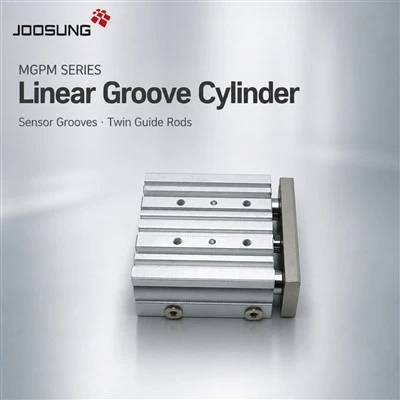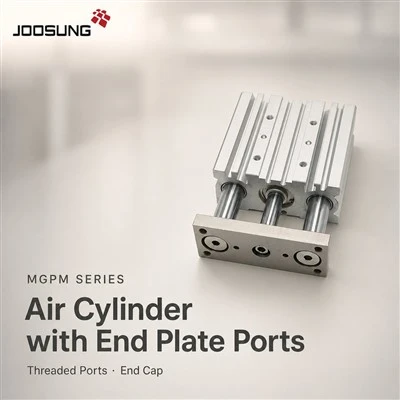
1. The basic structure of the cylinder
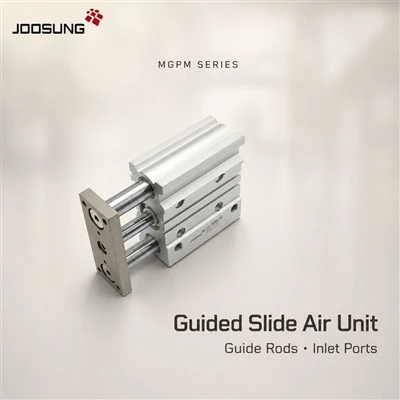
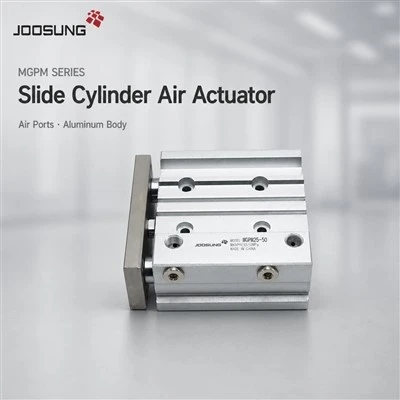
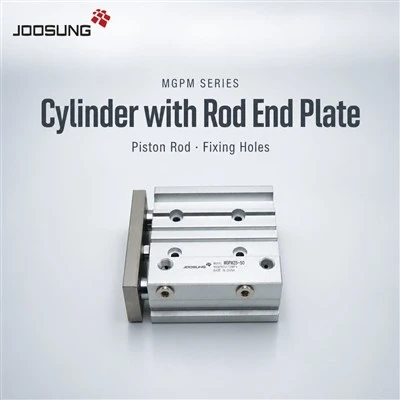
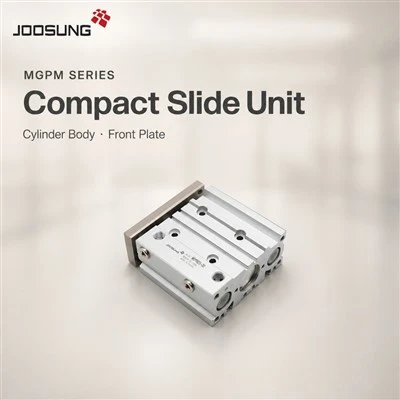
The so-called pneumatic actuator is an element that uses compressed air as power and the drive mechanism performs linear, swinging and rotating motions.
Take the most common basic cylinder as an example and see what's inside.

So the question is, I wonder if you can see if it is a single-acting cylinder or a double-acting cylinder after looking at the picture above?
2. Classification of cylinders
Single acting cylinder:
Only one side of the piston is supplied with air, and the air pressure pushes the piston to generate thrust to extend and return by spring or its own weight.
It's like, even if you're a single dog, you can go to the squash court and have a good time. Because the squash will come back to you because of the bounce.
Double acting cylinder:
There is air pressure on both sides of the cylinder piston to achieve forward or backward action.
So, to put it another way, it becomes - you were lucky enough to find your goddess, and you can now play badminton with her.
3. Cylinder buffer
However, the cylinder also has a problem. If the buffer device is not used, when the piston moves to the end, especially the cylinder with long stroke and high speed, the kinetic energy of the piston hitting the end cover will be very large, which will easily damage the parts and shorten the life of the cylinder. .
What's more, the noise caused by the impact is quite terrible. If the noise of a cylinder without a buffer device is 70dB, the noise of the entire factory will be as high as 140dB, like being on the runway of a jet plane for a long time. This has reached the limit of human beings intolerable and painful.
How to solve these problems? Our designers have made a buffer design for the cylinder.
(1) Hydraulic buffer
The first and simplest method of cylinder buffering is to install a hydraulic buffer at the front end of the cylinder.
The following is the working principle of the hydraulic buffer:

Through the unique damping hole design, mineral oil is used as the medium to smoothly realize the transition from high-speed light load to low-speed heavy load.
Features: The wide range from small energy to large energy does not need to be adjusted, which can achieve the best energy absorption.
(2) Rubber buffer
For a more compact installation in the factory, the designers thought of another method, the second method: rubber buffer. (Bush pads are provided at both ends of the piston rod)
Precautions:
1) The buffering capacity is fixed and immutable, and the buffering capacity is small. It is mostly used in small cylinders to prevent operation noise.
2) It is necessary to pay attention to the phenomenon of deformation and peeling caused by the aging of the rubber.
3) Air buffer
The third method: gas buffer. (When the piston moves, the buffer sleeve and the sealing ring act together to form a closed air chamber/buffer cavity on one side to achieve buffering.)
The gas in the buffer chamber can only be discharged through the buffer valve. When the opening of the buffer valve is very small, the pressure in the cavity rises rapidly, and the pressure produces a reaction force on the piston, thereby decelerating the piston until it stops.
Precautions:
1) By adjusting the opening of the buffer valve, the buffer capacity can be adjusted. The smaller the opening, the greater the cushioning force.
2) Buffer is realized by using the back pressure when the cylinder operates. The cylinder back pressure is small. The buffering capacity will also be smaller. When using, pay attention to the control method of load rate and cylinder speed.
4. Magnetic switch
At this point, we know how the cylinder moves freely. But there are rules for everything, and so is the movement of the cylinders. Are they all in place? Have you crossed the line? Who should supervise this?
Magnetic switch - it is a feedback signal to judge whether the cylinder is running in place, and controls the corresponding solenoid valve to complete the switching action.
Principle: The magnetic ring moving with the piston approaches or leaves the switch, and the switches are attracted or disconnected by the magnetization, and an electrical signal is sent out.

Features: It is not necessary to set the mechanical control valve and its mounting bracket at both ends of the cylinder stroke, and does not need to set the striker at the end of the piston rod, so it is easy to use, compact in structure, high in reliability, long in life, low in cost, and fast in switching response time. , has been widely used.
Lubrication of the cylinder
In addition, we also want to talk about lubrication, the purpose is to reduce the damage of the cylinder movement to the cylinder itself and prolong the service life of the cylinder.
Lubricate with oil:
Use a lubricator to mix lubricating oil into compressed air and deliver it to the cylinder.
Non-oil lubrication:
Only use built-in grease, no need to use lubricator for oil supply; avoid contamination of food and drug packaging by oil particles during transportation, influence on the properties of some industrial chemical pigments, or influence on the accuracy of testing instruments, etc. .
At present, most manufacturers have fully realized the non-fuel cylinder.
Precautions:
Once lubricating oil is used, it needs to be used continuously. Once deactivated, lifespan drops dramatically.