

Let's take a look at the important role of solenoid valves in industrial automation control systems. This component is based on the principle of electromagnetic induction. It controls the movement of the valve core by changing the energised state of the electromagnet, thereby achieving precise control over the on-off, flow rate and direction of the fluid.
The working principle of a pneumatic solenoid valve
The core of a pneumatic solenoid valve is to control the movement of the valve core through electromagnetic induction. When the electromagnet is energised, the generated magnetic field will push or pull the valve core, causing it to change position and thus open or close the valve. This design endows the solenoid valve with the advantages of simple structure, convenient operation, fast response speed and reliable performance.
The application scenarios of the pneumatic solenoid valve
In the industrial field, solenoid valves are widely used in hydraulic, pneumatic and cooling systems to control fluid flow. It not only can achieve functions such as starting, stopping, regulating and protecting, but also can be used in conjunction with other automated equipment such as sensors, controllers and actuators to complete more complex control tasks. For instance, in the automatic control system on a production line, solenoid valves can precisely control the flow direction and volume of liquids or gases, ensuring the smooth progress of the production process.
The advantages and limitations of solenoid valves
The greatest advantage of solenoid valves lies in their rapid response and high reliability. They can complete the on-off action in a short time and are suitable for applications that require frequent operations. However, solenoid valves also have some limitations, such as high requirements for power supply and the possibility of affecting performance in extreme environments. Therefore, when choosing an electromagnetic valve, these factors should be carefully considered based on the specific application scenario.
Therefore, with its simple and efficient characteristics, solenoid valves have become the ideal choice for industrial automation control systems, capable of meeting the fluid control requirements under various complex working conditions.
Understand solenoid valves at one go
pneumatic solenoid valve is a device that uses electromagnetic principles to control the flow of fluids (such as gases, liquids, etc.). It mainly consists of two parts: an electromagnet and a valve body. The on-off state of the valve body is changed by the attraction and release of the electromagnet, thereby achieving precise control of fluid flow.
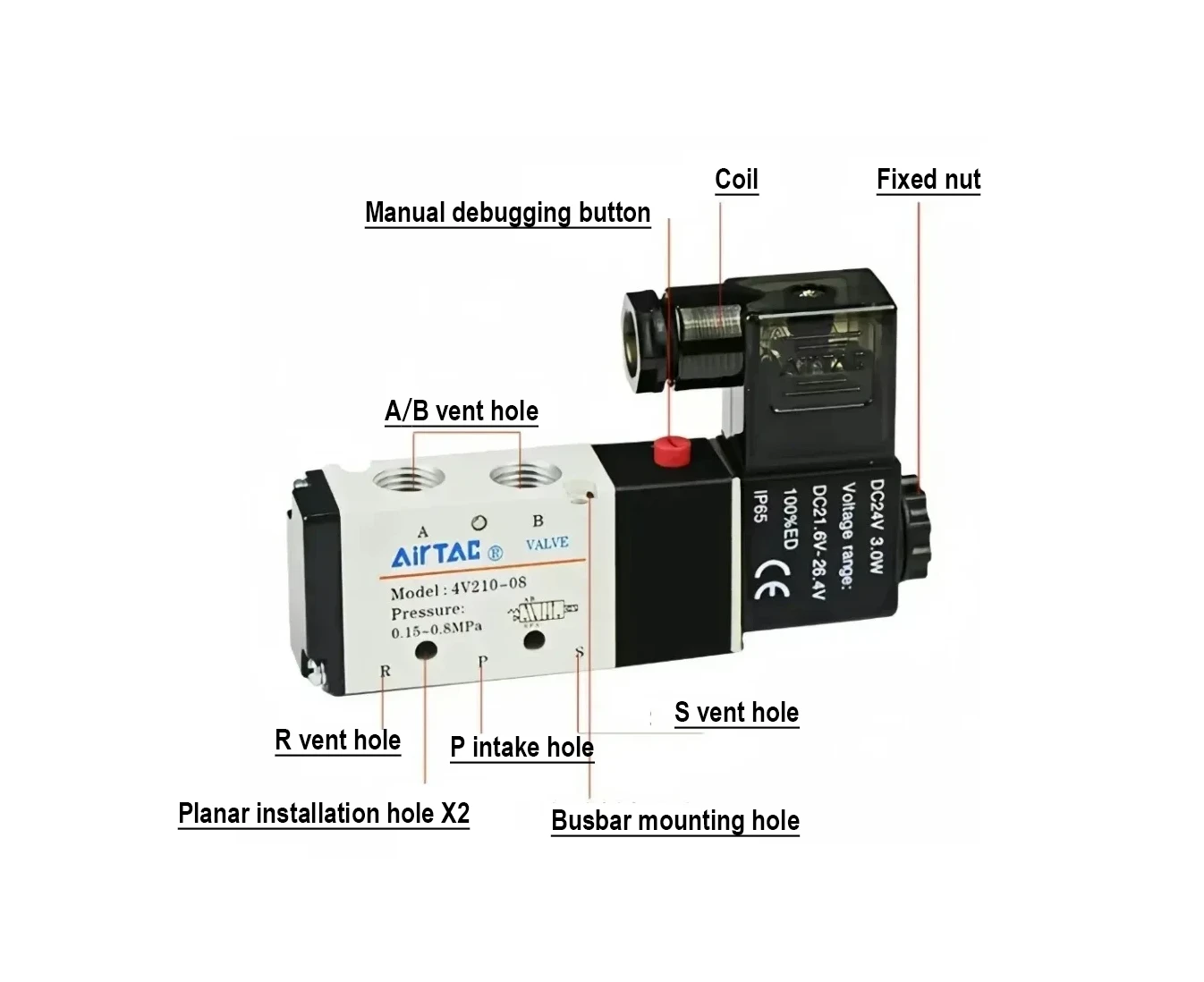
Types of solenoid valves
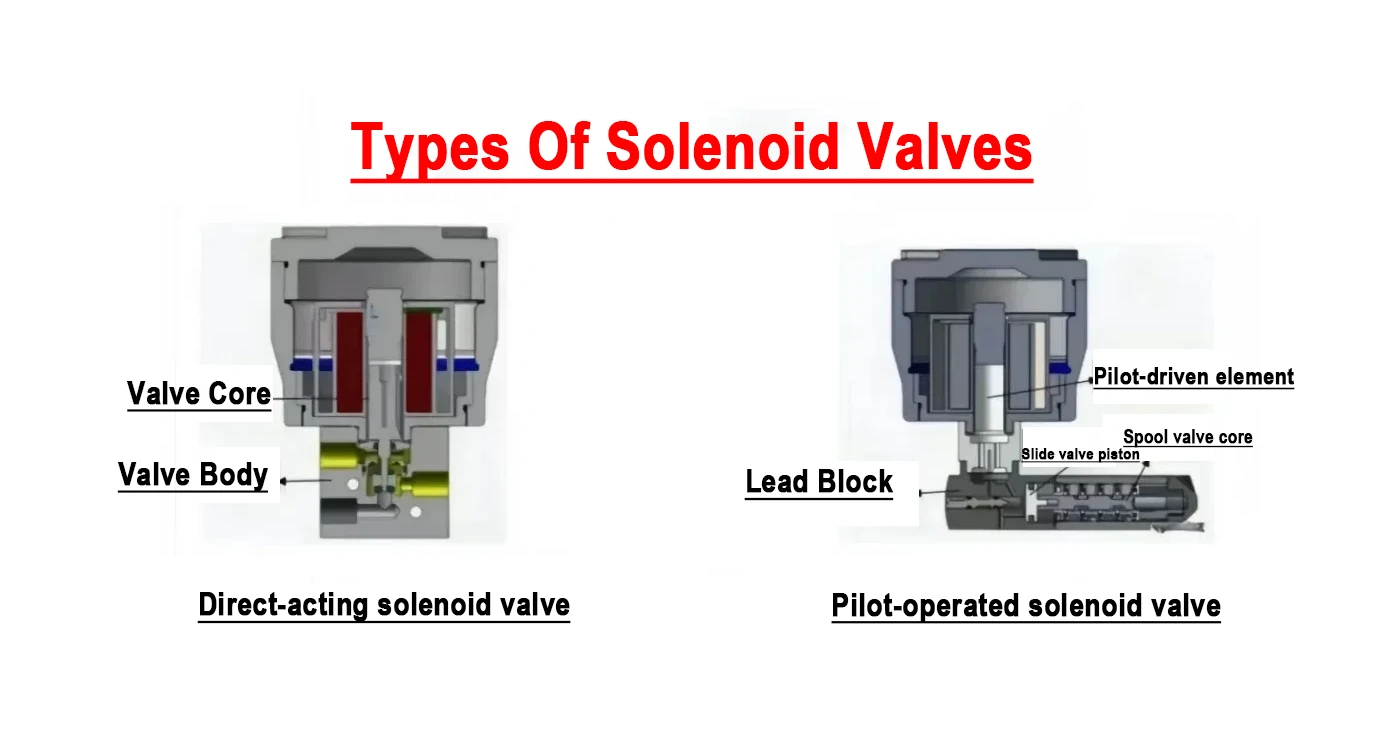
Direct-acting solenoid valve
Working principle: The magnetic force generated by the coil directly drives the valve core to move, thereby controlling the on-off of the fluid. Features: Simple structure, fast response speed, but the working pressure range is relatively narrow. It is generally suitable for low-pressure and low-flow applications.
2. Pilot-operated solenoid valve
Working principle: It consists of a pilot valve and a main valve. The pilot valve opens or closes first, and the opening or closing of the main valve is controlled by the pressure difference between the two ends of the main valve core.
Features: It has a wide working pressure range and flow regulation capability, making it suitable for high-pressure and high-flow applications.
3. Step-by-step direct-acting solenoid valve
Working principle: It combines the features of direct-acting and pilot-operated solenoid valves. When the coil is energised, the pilot valve operates first to balance the pressure at both ends of the main valve core, and then the main valve core operates.
Features: It is suitable for occasions with large pressure differences and has a wide working pressure range
-- Position -- communication
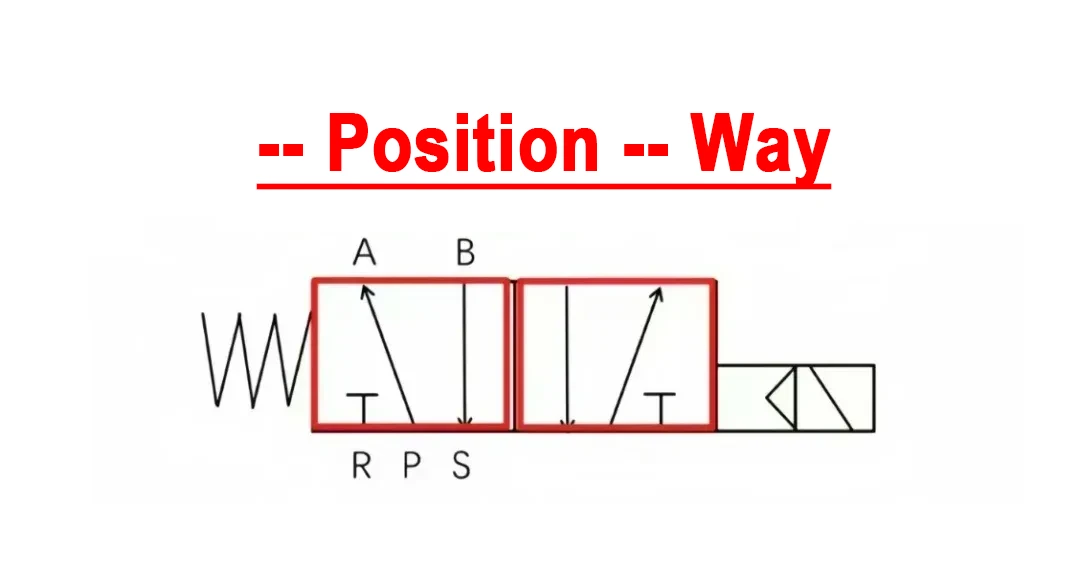
This box indicates the working position of the valve. The number of boxes indicates the number of positions. In the legend, it is two.
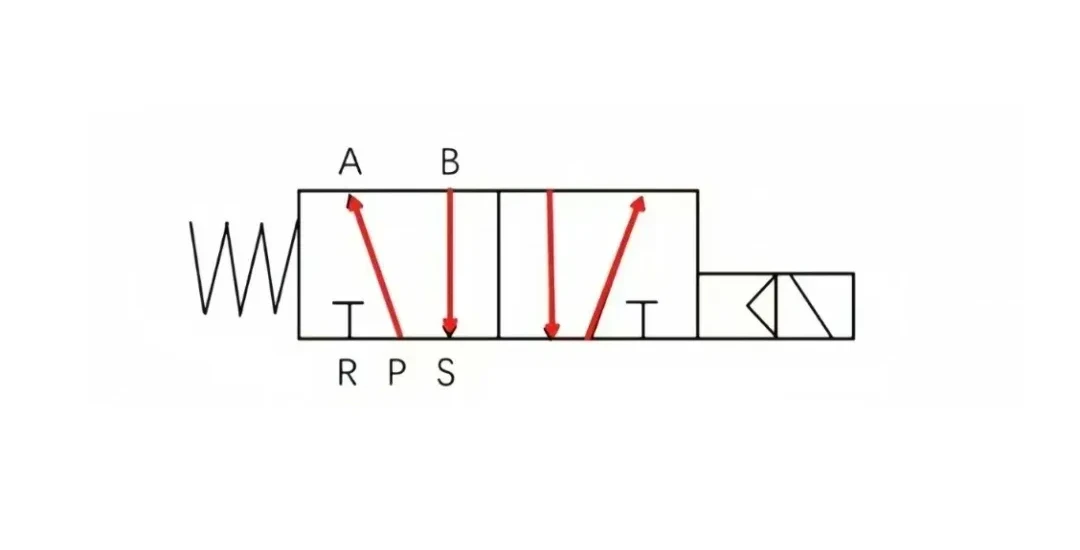
The arrows within the box indicate that the fluid is in a connected state. A T-shaped interface indicates that the path is not open. The number of interfaces connected outside the box indicates the number of channels. In the legend, it is five channels.
The pattern on the left represents a coil, and the one on the right represents a spring. The legend shows a single control.
The square box near the coil represents the state of the valve core when powered on. The square box near the spring indicates the state of the valve core when the coil is de-energised and the spring returns.
Above is Let's take a look at the important role of solenoid valves in industrial automation control systems. To learn more related information, visit https://www.joosungauto.com/.


