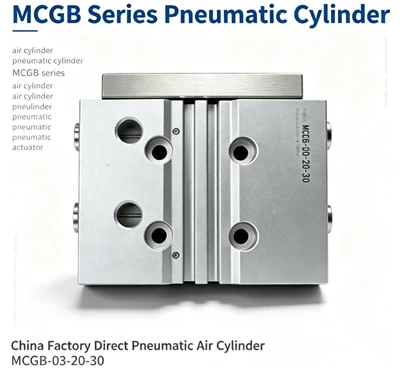
The pneumatic valve uses compressed air as the power source and the cylinder as the actuator. It drives the valve through the electric valve positioner, converter, solenoid valve, position holding valve and other accessories to realize the on-off or proportional adjustment, and receives the control signal from the industrial automation control system to complete the regulation of the pipeline medium: flow, pressure, temperature and other process parameters. The pneumatic valve has the characteristics of simple control, fast response, intrinsic safety and no need of additional explosion-proof measures.
Pneumatic valve is usually composed of pneumatic actuator and control valve connected, installed and debugged. Pneumatic actuator can be divided into single acting and double acting. There is a return spring in the single acting actuator, but there is no return spring in the double acting actuator. When the single acting actuator loses its origin or suddenly fails, it can automatically return to the open or closed state of the valve.
Pneumatic valve according to its action mode is divided into two types: normally open and normally closed. The pneumatic control valve is usually realized by the positive and negative effects of the actuator and the different assembly methods of the valve structure.