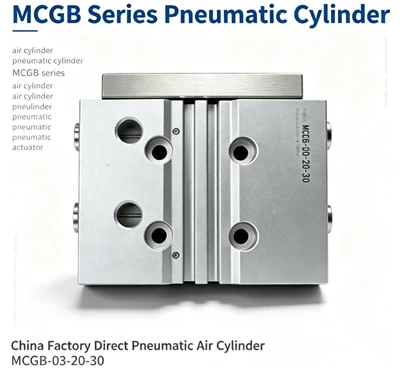
What are the differences between hydraulic cylinders and pneumatic cylinders? What causes the rebound of hydraulic cylinders
The differences between hydraulic cylinders and pneumatic cylinders
A hydraulic cylinder is a hydraulic actuator that converts hydraulic energy into mechanical energy and performs linear reciprocating motion (or oscillating motion). According to the common structural forms of hydraulic cylinders, they can be classified into four types: piston type, plunger type, telescopic type, and swing type. A cylinder is a component of a pneumatic system that converts pneumatic energy into mechanical energy. The differences between hydraulic cylinders and cylinders mainly lie in the following four aspects:

1. The first difference between a hydraulic cylinder and a pneumatic cylinder lies in their respective working principles, which is an essential distinction: the pressure used in the pneumatic system of a pneumatic cylinder is generally within the range of 0.2 to 1.0MPa, so pneumatic cylinders cannot be used as high-power components. Hydraulic cylinders are different. By using a hydraulic system, hydraulic cylinders can be used to produce components with relatively high power.
2. In terms of the scarcity of resources, there is a second difference between hydraulic cylinders and pneumatic cylinders: The normal operation of hydraulic cylinders relies on hydraulic oil, which is a non-renewable resource and cannot be recycled. Moreover, the used hydraulic oil will have an impact on the environment. Air pressure cylinders are different. They operate by using air, which is inexhaustible and has no cost or supply difficulties. The used gas can be directly discharged into the atmosphere, which is convenient to handle and can be reused without causing any pollution!
3. In terms of the working resistance between hydraulic cylinders and pneumatic cylinders, the third difference between hydraulic cylinders and pneumatic cylinders is that air has a lower viscosity, so its resistance is less than that of hydraulic oil.
4. In terms of resource utilization efficiency, the fourth difference between hydraulic cylinders and pneumatic cylinders is that the compression rate of air is much higher than that of hydraulic oil, so its working smoothness and response are much worse.
What causes the rebound of hydraulic cylinders
1. Hydraulic cylinder leakage;
2. The cause of the control valve: Check if there are two series-connected directional control valves in the circuit, one fast and the other slow.
3. The reason for the external load is that the external load is too large when it is at the median.
Above are the differences between hydraulic cylinders and pneumatic cylinders. content, to learn more related information is available at https://www.joosungauto.com/.