

In pneumatic control systems, a longstanding engineering dilemma persists: is a two-piece air preparation unit sufficient, or is a three-piece unit mandatory?
Junior designers often specify three-piece units by default, assuming "more components mean greater reliability." To experienced engineers, this unthinking choice reveals insufficient engineering judgment.
Rather than relying on generic selection tables, this article analyzes the core differences between these two configurations from fundamental principles and current industry standards, focusing on the pneumatic system's air preparation unit.
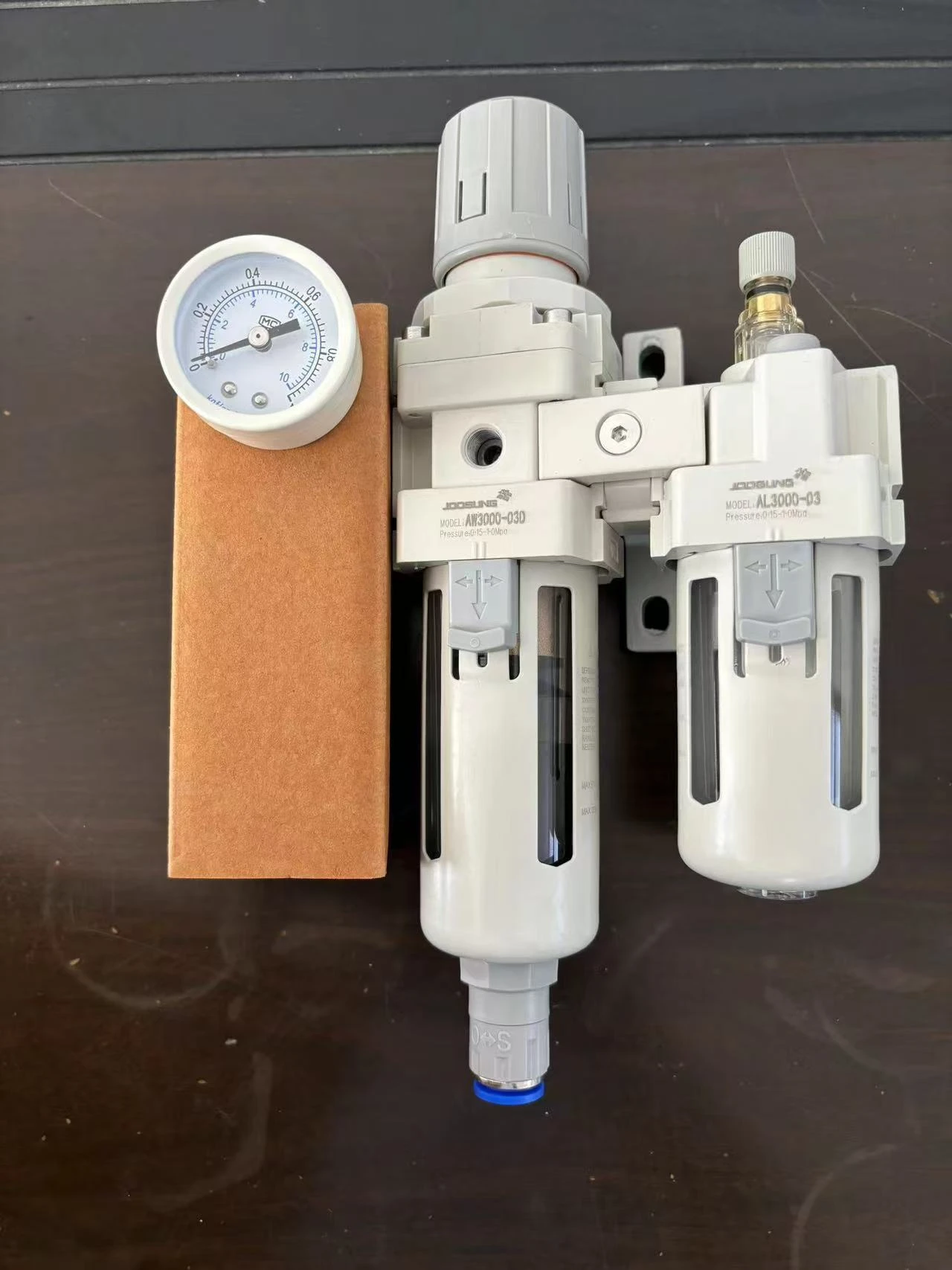
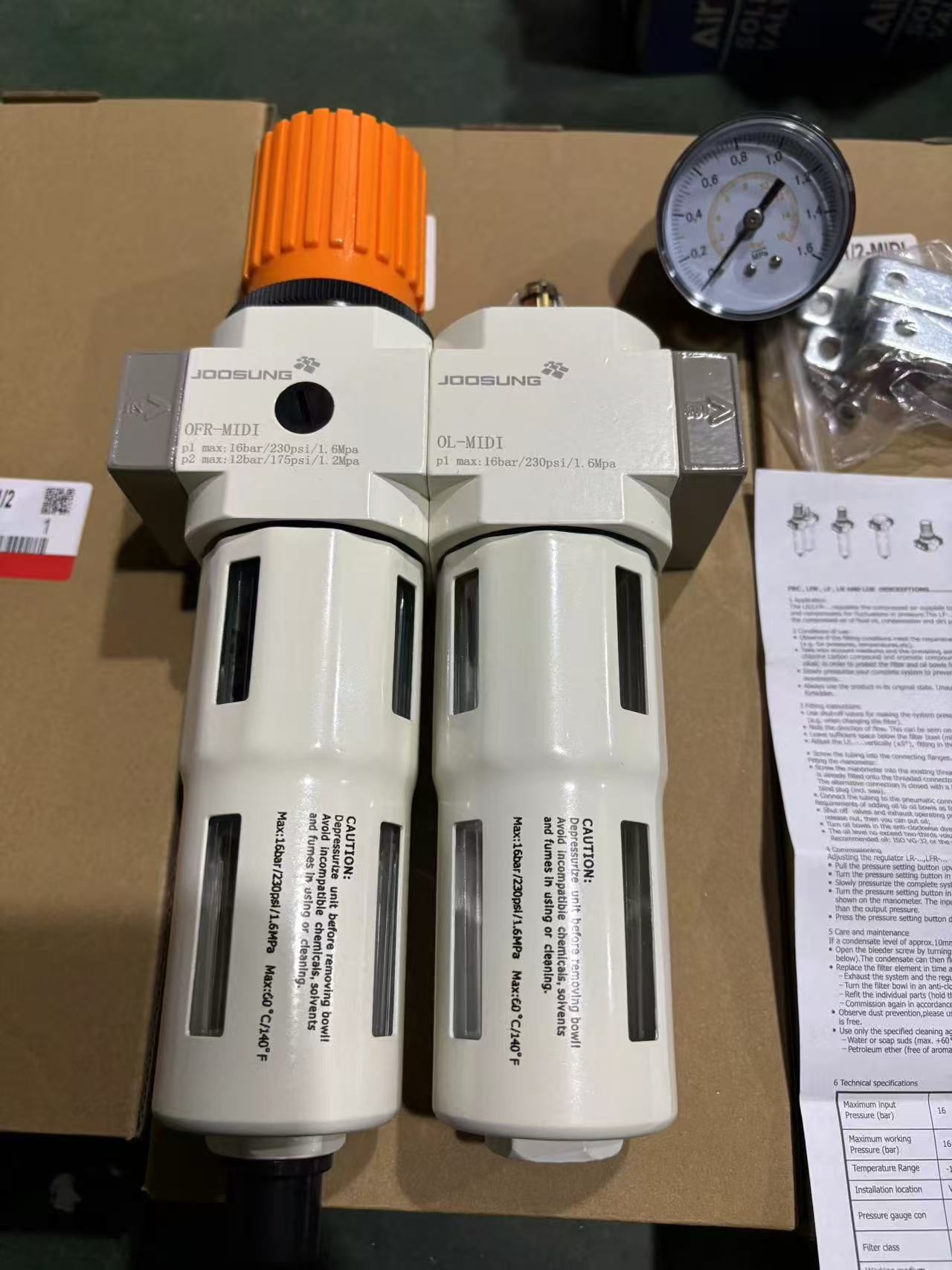
FRL Fundamentals
Under ISO 1219-1 (Graphical symbols for pneumatic systems and components), both configurations are internationally referred to as FRL units:
- F: Filter
- R: Regulator
- L: Lubricator
- Three-piece unit: Integrated Filter + Regulator + Lubricator
- Two-piece unit: Combined Filter + Regulator only
The difference is far more than component quantity: removing the lubricator represents a paradigm shift toward oil-free pneumatic technology.
Core Differences
1. Functional Distinction (GB/T 14513-2021)
- Three-piece unit: Delivers lubricated compressed air, providing filtration, pressure regulation, and oil mist (1–3 μm particle size) for downstream components.
- Two-piece unit: Delivers dry, oil-free compressed air, removing particulates and condensate without lubrication.
2. Structural Design
Early three-piece units used discrete series-connected components. Modern two-piece units adopt modular, stackable construction per ISO 11727, often integrating filter and regulator into a single filter-regulator assembly to reduce leakage points and simplify installation.
The Rise of Two-Piece Units: Oil-Free Pneumatics
High-end applications including semiconductors, food processing and pharmaceuticals exclusively use two-piece units, driven by the industry shift to oil-free operation.
Modern pneumatic components from leading manufacturers (SMC, Festo, etc.) use self-lubricating seals and pre-lubricated bearings with factory-filled long-life grease, eliminating the need for airborne oil mist.
According to JB/T 5967-2021, oil mist lubricators are strictly prohibited in systems using oil-free or self-lubricating components, as excess oil mist forms carbonized sludge that may clog or seize proportional valves and precision flow controls.
Application Profiles
Two-Piece Unit
- Features: High efficiency, clean, low-maintenance
- Applications: Precision electronics, medical devices, laser cutters, new energy equipment
- Principle: Relies on built-in component lubrication, avoiding air circuit contamination
Three-Piece Unit
- Features: Robust, wear-protective, maintenance-intensive
- Applications: Woodworking machinery, pneumatic tools, traditional forging equipment
- Principle: Continuous oil mist lubrication and cooling for pneumatic motors and impact cylinders
Flow Performance: Pressure Drop
Per ISO 6358, each series component introduces pressure loss.Three-piece units typically deliver 10%–20% lower rated flow than same-port-size two-piece units due to the additional flow resistance of the lubricator.In high-flow systems with large-bore cylinders, undersized three-piece units can cause slow, underpowered actuation.
Maintenance Requirements
- Two-piece unit: Focused on condensate drainage; many models support automatic drainage.
- Three-piece unit: Requires condensate drainage plus regular oil-level monitoring and drip-rate adjustment (1–5 drops/min). Only ISO VG 32 turbine oil is permitted; engine oil is not allowed.
Conclusion
The essential difference lies in lubrication responsibility allocation:
- Two-piece units rely on modern, maintenance-free self-lubricating components.
- Three-piece units apply external oil mist to reduce friction and wear.
Selection should be based on actual actuator lubrication requirements, not default specification. In the era of oil-free and clean manufacturing, deliberate simplification often demonstrates higher engineering professionalism than redundant configuration.


