

The working principle, challenges and optimization strategies of cylinders
01
The working principle and internal structure of the cylinder
△ Cylinder Introduction
The cylinder is a core component in pneumatic technology. As a representative of pneumatic actuating elements, it is driven by compressed air and can achieve linear, oscillating and rotational movements of mechanisms. The structure and working principle of the cylinder reveal its significance in pneumatic technology and are the key for us to understand the entire pneumatic system.

△ Internal structure of the cylinder
By analyzing the most commonly used basic type of cylinders, we can gain a deep understanding of the structure and principle of cylinders. The internal structure of the commonly used basic type cylinder demonstrates the mystery of pneumatic actuating elements.

02
△Cylinder types and challenges
Single-acting and double-acting cylinders
In a single-acting cylinder, the piston only receives air supply on one side, while in a double-acting cylinder, both sides of the piston are subjected to air pressure. In a single-acting cylinder, the piston is supplied with air from one side, while in a double-acting cylinder, the air is balanced on both sides.
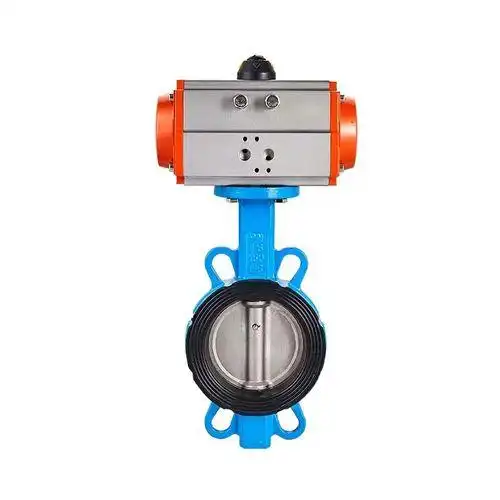
△ Usage challenges and noise issues
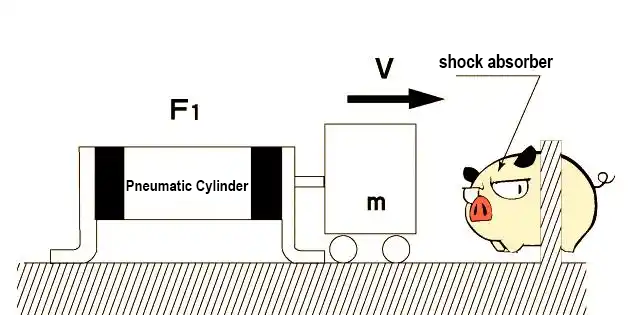
There are some challenges in the use of cylinders, especially when no buffer device is adopted. High-speed double-acting cylinders will generate significant kinetic energy as they approach the end of the stroke. The impact force brought by this kinetic energy may cause damage to parts and shorten the overall service life of the cylinder. In addition, the noise problem should not be ignored either. Cylinders without buffer devices may generate up to 70dB of noise during operation, and in factory environments, this noise can be amplified to 140dB. Long-term exposure to such an environment not only damages hearing but may also have an irreversible impact on intelligence.
03
Buffering methods and precautions
△ Hydraulic buffer design
Hydraulic buffering is an effective method to deal with shock and noise problems. The hydraulic buffer achieves smooth energy absorption through the mineral oil medium. By installing a hydraulic buffer at the front end of the cylinder, it is equivalent to introducing a soft buffering mechanism between the piston and the cylinder, thereby effectively absorbing the impact force.
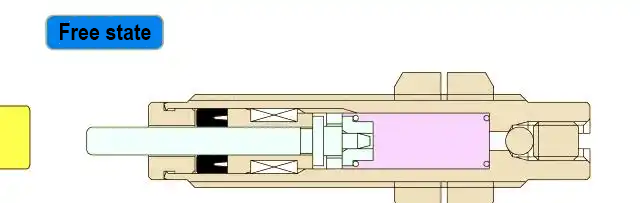
△ Rubber and air buffer
Rubber buffering achieves the buffering function by setting buffer pads at the end of the piston rod. The designer also ingeniously utilized the "air buffering" technology, forming a closed air chamber or buffer cavity through the joint action of the buffer sleeve and the sealing ring, thereby reducing vibration and noise.


△ Precautions for Use
During the operation process, the buffering capacity can be achieved through adjustment. Specifically, the buffering capacity can be adjusted and changed, and the influence of cylinder back pressure should be used with caution. It should be noted that the back pressure of the cylinder will affect its buffering capacity, and the control of load rate and speed is also an important factor that cannot be ignored.
04
△Cylinder feedback and lubrication
The function of the magnetic switch
Magnetic switches play an important feedback role in the operation of the cylinder. The magnetic switch effectively feeds back the movement state of the piston, ensuring normal operation. By detecting the changes in the position of the magnetic ring, corresponding feedback signals are provided to ensure the normal operation of the cylinder.
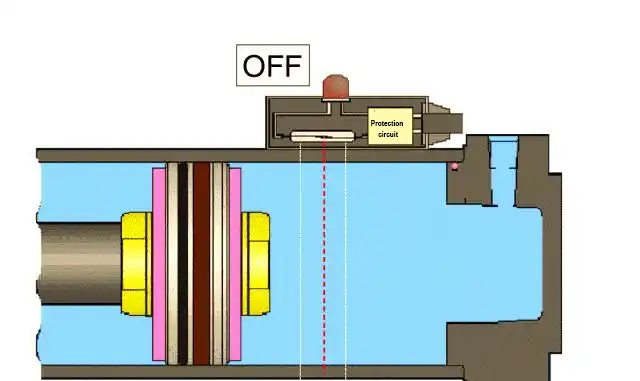
△ Cylinder lubrication method
Lubrication is of vital importance in the operation of cylinders, with the aim of reducing wear and extending service life. When choosing a lubrication method, the application environment should be taken into consideration to avoid causing damage to the equipment or the environment. The main lubrication methods include oil-lubricated and non-oil-lubricated. Choosing the appropriate lubrication method is equally important for protecting equipment and the production environment.


