

How to select a Pneumatic solenoid valve and what parameters are needed for the selection of a Pneumatic solenoid valve?
A pneumatic solenoid valve is an industrial device controlled by electromagnetism. It is an automated basic component used to control fluids and belongs to the actuator, not limited to hydraulics and pneumatics. It is used in industrial control systems to adjust the direction, flow rate, speed, and other parameters of the medium. When selecting a Pneumatic solenoid valve, the first step should be to follow the four major principles of safety, reliability, applicability, and economy in sequence. Secondly, the selection should be made based on six aspects of on-site working conditions (i.e., pipeline parameters, fluid parameters, pressure parameters, electrical parameters, action mode, and special requirements).
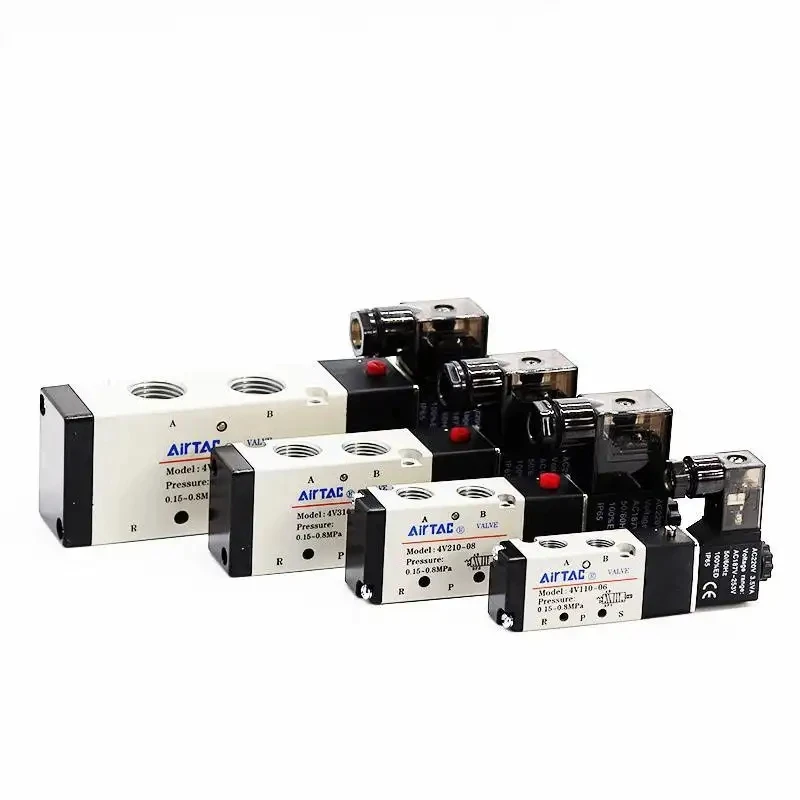
How to select a Pneumatic solenoid valve and what parameters are needed for the selection of a Pneumatic solenoid valve?
1. Select the solenoid valve's diameter specification (i.e., DN) and interface method based on the pipeline parameters
1) Determine the diameter (DN) size based on the inner diameter of the on-site pipeline or the flow requirement;
2) Interface type: Generally, for interfaces larger than DN50, flange interfaces should be selected. For interfaces ≤DN50, users can freely choose according to their needs.
2. Select the material and temperature group of the solenoid valve based on the fluid parameters
1) Corrosive fluids: It is advisable to use solenoid valves and all stainless steel. For edible super-clean fluids: Food-grade stainless steel solenoid valves are recommended.
2) High-temperature fluids: It is necessary to select solenoid valves made of high-temperature resistant electrical and sealing materials, and choose the piston structure type.
3) Fluid state: It can be in gaseous, liquid, or mixed states. Especially when the diameter is larger than DN25, it is necessary to distinguish them.
4) Fluid viscosity: Generally, it can be freely selected below 50cSt. If it exceeds this value, a high-viscosity solenoid valve should be chosen.
3. Select the principal and structural type of the solenoid valve based on the pressure parameters
1) Nominal pressure: This parameter has the same meaning as other general valves and is determined based on the nominal pressure of the pipeline.
2) Working pressure: If the working pressure is low, the direct-acting or stepwise direct-acting principle must be selected. When the minimum working pressure difference is above 0.04Mpa, direct-acting type, step-direct-acting type, and pilot-operated type can all be selected.
4. Electrical selection: The voltage specification should give priority to AC220V and DC24 as they are more convenient.
5. Select based on the duration of continuous operation: normally closed, normally open, or continuously powered on
1) When the solenoid valve needs to be open for a long time and the duration is longer than the closing time, the normally open type should be selected.
2) If the opening time is short or the opening and closing times are not long, then choose the normally closed type.
3) However, for some working conditions used for safety protection, such as monitoring the flame of furnaces and kilns, the always-on type cannot be selected; instead, the type that can be powered on for a long time should be chosen.
6. Select auxiliary functions according to environmental requirements: explosion-proof, check valve, manual, anti-fog, water spray, and submersible.
Above is how to select a Pneumatic solenoid valve content. To learn more related information are visit https://www.joosungauto.com/.


